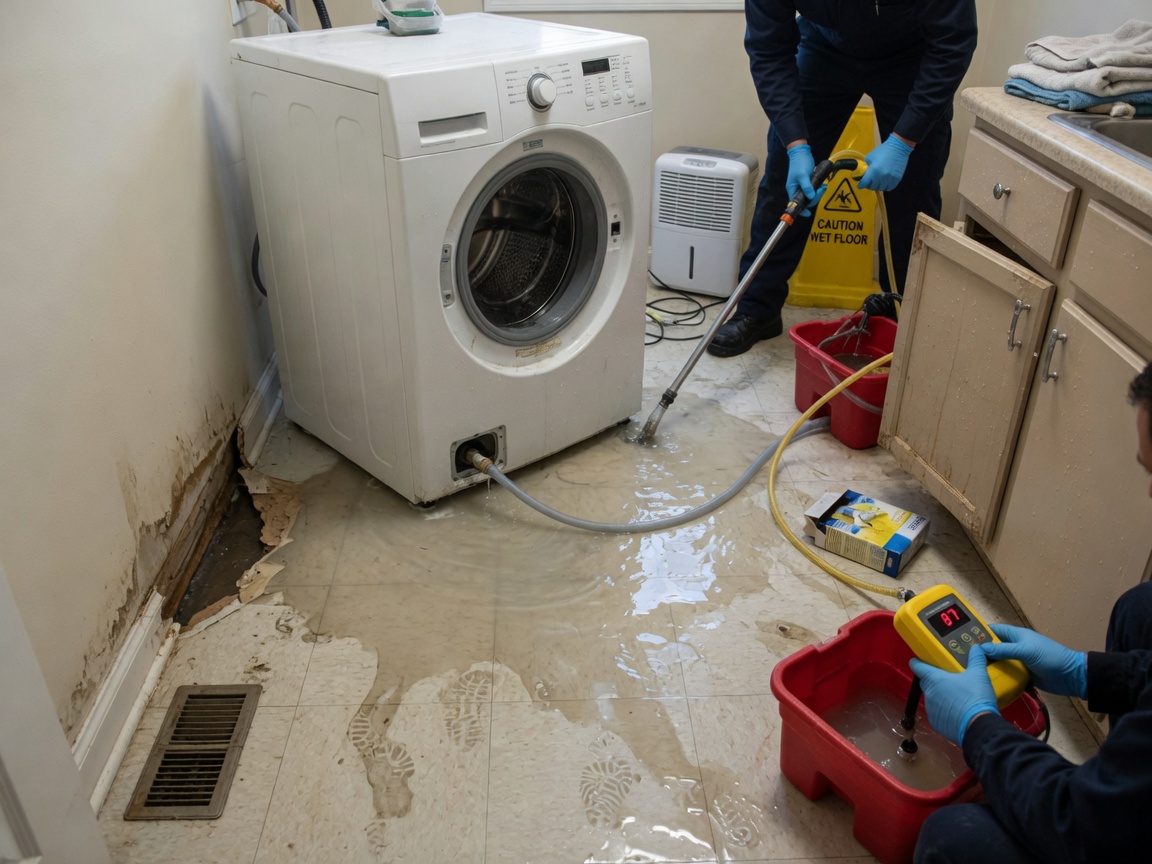
Storm Damage Water Cleanup in Annapolis targets water that enters structures during heavy rain events or coastal tidal flooding, especially in low-lying Eastport and City Dock areas.
Typical sources include wind-driven rain through compromised roofs or windows, overwhelmed storm drains, and tidal surges that push water into basements and ground-level spaces.
Property owners should avoid entering standing water, operating electrical equipment in wet areas, and delaying extraction, as each hour increases saturation of drywall, insulation, and flooring.
Affected materials often include older plaster walls in historic Annapolis buildings, hardwood floors, and carpet padding that trap moisture and require targeted moisture detection before drying begins.
Assessment begins with identifying water depth and contamination level, followed by extraction using truck-mounted equipment suited for larger storm volumes rather than small appliance leaks.
Drying and dehumidification timelines extend when multiple rooms are involved or when humidity from nearby waterways slows evaporation rates.
Additional specialists may be needed if electrical systems have been submerged or if structural components show signs of compromise beyond simple water removal.
Project scope changes with the amount of water, square footage affected, time elapsed before discovery, and whether the property is a single-family home or multi-unit commercial building.
When Storm Damage Water Cleanup Is Typically Needed
This service is required after heavy rainfall overwhelms local drainage, tidal flooding reaches interior spaces, or wind-driven rain bypasses exterior barriers in older Annapolis construction.
What Property Owners Should Avoid
Do not attempt to remove large volumes of water with household vacuums, disturb potentially contaminated sediment, or run HVAC systems that can spread moisture through ductwork.
Ceiling and Wall Water Damage Restoration Services We Offer
✓Tidal Surge Extraction
Removes saltwater pushed into low-lying Eastport properties during high tides combined with storms, requiring corrosion-resistant equipment and faster drying to limit salt damage.
✓Wind-Driven Rain Extraction
Targets water forced through windows and siding during high winds, focusing on upper-level saturation that differs from ground-level flood patterns.
Ceiling and Wall Water Damage Restoration Cost in Annapolis, MD
| Service | Typical Range | What Affects It |
|---|---|---|
| Water volume | Larger volumes increase extraction equipment and labor hours | Influences total duration |
| Square footage affected | More area requires additional drying equipment | Multi-room jobs extend timeline |
| Water source contamination | Storm water often carries sediment requiring extra cleaning | May affect disposal methods |
| Time before discovery | Longer exposure increases saturation depth | Can require more demolition |
| Materials affected | Hardwood and plaster need slower drying protocols | Changes equipment settings |
| Access difficulty | Tight historic spaces limit equipment placement | Extends labor time |
Ranges are typical for Annapolis, MD and confirmed with an exact written quote before any work starts.
How it works
- 1
Initial Assessment
Technicians measure water depth, test for contamination, and locate hidden moisture in walls and floors using meters.
- 2
Water Extraction
High-volume pumps and vacuums remove standing water before it migrates further into building materials.
- 3
Drying and Monitoring
Air movers and dehumidifiers are positioned, with daily moisture readings to confirm progress.
Pricing
Final cost depends on observed conditions including water volume, affected square footage, and materials involved.