A burst pipe releases pressurized water that can saturate drywall, plaster, and flooring within minutes. In Annapolis older homes, copper or galvanized lines often fail at joints or from corrosion, sending water into wall cavities and ceilings.
Call (410) 755-8656 if you notice sudden ceiling drips, hissing sounds inside walls, or water pooling near baseboards. A technician can locate the break and begin extraction before the water migrates to lower levels.
Signs of a Burst Pipe
Sudden pressure loss at fixtures, bulging drywall, or discolored ceiling patches often appear first. These clues differ from gradual appliance leaks because the volume is higher and the source is inside the plumbing system.
Immediate Property Owner Steps
Shut off the main water valve if accessible, move furniture away from wet areas, and avoid switching on lights or appliances near standing water. These actions limit further saturation while waiting for the crew.
Extraction and Cavity Drying
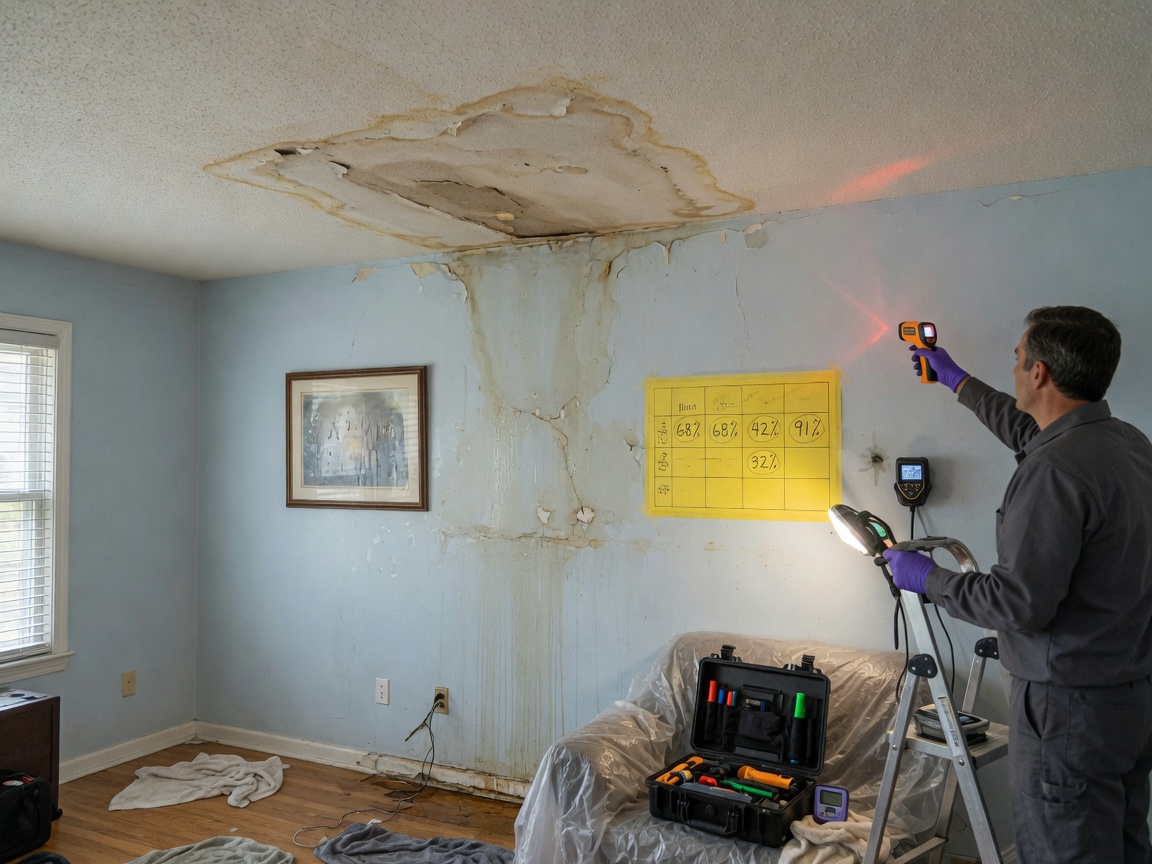
Technicians use high-volume pumps followed by air movers and dehumidifiers directed into wall cavities. Moisture meters track hidden water behind plaster or lath so drying continues until readings return to normal.
When pipe failure occurs in Eastport low-lying homes, tidal humidity can slow evaporation, extending the drying phase beyond typical residential timelines.
Materials That Need Different Treatment
Historic plaster walls absorb water differently than modern drywall and may require slower drying to avoid cracking. Hardwood floors in Annapolis row houses often need top-down sanding after extraction rather than simple surface drying.
If the burst has traveled into electrical boxes or HVAC ducts, a qualified electrician or HVAC specialist is required before restoration proceeds.
Water Damage Restoration Services We Offer
✓Ceiling and Wall Water Damage Restoration
Removes water that has traveled upward or laterally from a pipe break and restores damaged drywall or plaster surfaces.
✓Structural Drying and Dehumidification
Uses targeted airflow and moisture extraction to dry cavities after burst pipe water has been removed from visible surfaces.
Water Damage Restoration Cost in Annapolis, MD
| Service | Typical Range | What Affects It |
|---|---|---|
| Amount of water released | Varies | Higher volume from a pressurized pipe increases extraction time and equipment needs. |
| Affected square footage | Varies | Water that reaches multiple rooms or multiple floors expands the drying footprint. |
| Wall and ceiling cavities | Varies | Plaster or lath construction in older Annapolis homes requires slower drying cycles. |
| Duration before discovery | Varies | Longer exposure allows water to reach subfloors and increases demolition requirements. |
| Access difficulty | Varies | Tight crawl spaces or finished basements limit equipment placement and extend project length. |
Ranges are typical for Annapolis, MD and confirmed with an exact written quote before any work starts.
How it works
- 1
Locate and Isolate the Break
Technicians shut off water at the main or nearest valve and confirm the pipe section responsible before extraction begins.
- 2
Standing Water Removal
Pumps and wet vacuums extract water from floors and cavities to prevent further migration into subfloors or lower levels.
- 3
Moisture Mapping
Infrared cameras and meters identify hidden saturation in walls and ceilings so drying equipment reaches every affected area.
- 4
Drying and Monitoring
Daily moisture readings guide equipment placement until all materials reach acceptable dryness levels.
Pricing
Project scope is determined after on-site assessment of water volume and affected materials.