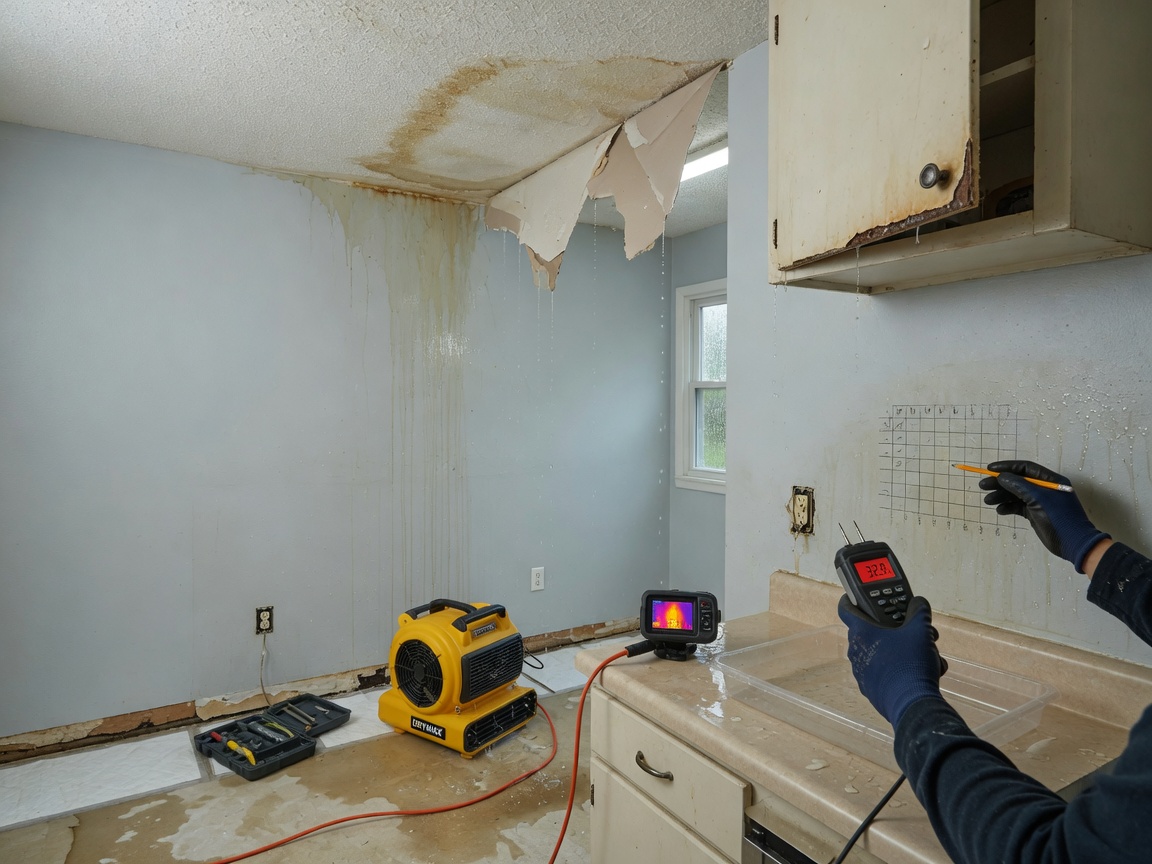
Water Damage Cleanup in Annapolis addresses standing water that enters properties through heavy coastal rain, tidal influences, or sudden appliance failures. Property owners need fast extraction to reduce saturation of floors and lower walls before mold risk rises.
Typical sources include roof leaks during nor'easters, overflowing toilets, or burst supply lines in older Eastport homes with aging plumbing. Signs appear as pooled water on concrete slabs, darkened baseboards, or musty odors within hours.
Immediate owner steps include shutting off water sources when safe and avoiding electrical outlets near wet areas. Professional crews then locate hidden moisture with meters before extraction begins.
Factors That Change Project Scope
Water volume, square footage reached, and time elapsed since discovery directly affect how much demolition and drying will follow. Contaminated water from sewage backups requires different handling than clean supply-line leaks.
Older Annapolis buildings often contain plaster walls and hardwood floors that absorb water differently than modern drywall or laminate. These materials may need targeted removal rather than simple drying.
When water reaches electrical systems or HVAC ducts, licensed specialists outside the restoration team must evaluate those components first.
Water Damage Cleanup Services We Offer
✓Standing Water Removal
Focuses on pumping and vacuuming visible water from floors before drying equipment is placed.
✓Initial Moisture Mapping
Uses meters to identify how far water has traveled into walls and subfloors, guiding the cleanup boundary.
Water Damage Cleanup Cost in Annapolis, MD
| Service | Typical Range | What Affects It |
|---|---|---|
| Amount of water present | Increases extraction time and equipment needs | Large volumes require more pumps and longer on-site hours. |
| Square footage affected | Expands drying zone and monitoring visits | Wider spread means additional containment and equipment. |
| Water source type | Raises handling protocols and disposal steps | Clean water allows simpler cleanup than contaminated sources. |
| Materials impacted | Determines removal versus drying decisions | Porous items like carpet often need replacement. |
| Access constraints | Adds labor for tight historic-home layouts | Narrow stairs or finished basements slow equipment movement. |
Ranges are typical for Annapolis, MD and confirmed with an exact written quote before any work starts.
How it works
- 1
Safety and Source Control
Crew confirms power is isolated and stops active leaks where possible before equipment enters the space.
- 2
Extraction
Truck-mounted and portable pumps remove bulk water from hard surfaces and carpets.
- 3
Boundary Confirmation
Technicians recheck moisture levels to verify all affected areas received treatment.
Pricing
Final scope depends on inspection findings.