# Burst Pipe Water Damage Cleanup in Annapolis
A burst pipe creates sudden, high-volume water release inside the structure, often saturating multiple building cavities at once. Property owners should shut off the main water supply immediately and contact a restoration team for assessment and extraction.
Typical Sources and Signs
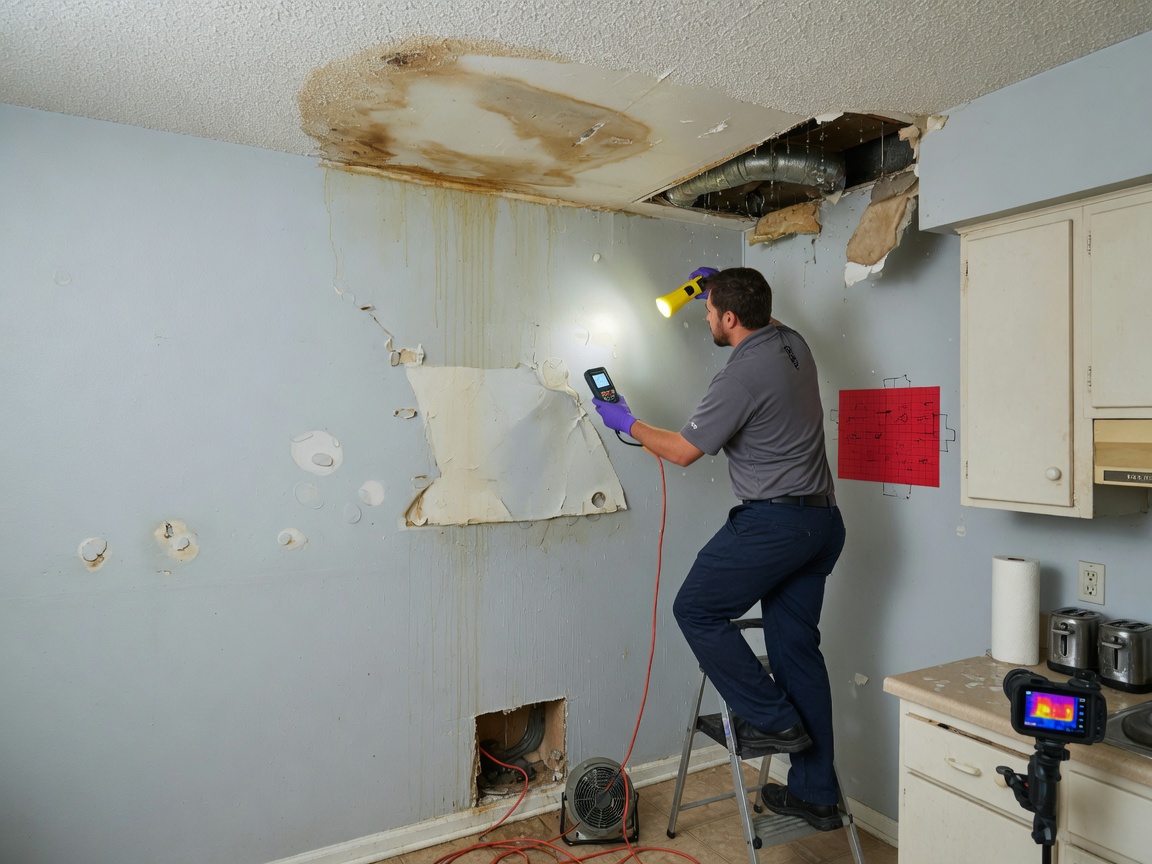
Aging galvanized or copper lines in older Annapolis homes, freezing temperatures in unheated spaces, or sudden pressure spikes commonly cause bursts. Visible signs include water stains on ceilings, bulging drywall, or pooled water near baseboards.
Immediate Property Owner Steps
Stop the water source if safe, move furniture and valuables away from affected areas, and avoid using electrical outlets near standing water. Do not attempt to dry the space with household fans alone, as trapped moisture behind surfaces often remains undetected.
Extraction and Moisture Detection
Technicians locate the break, remove standing water, then use moisture meters and infrared cameras to trace migration paths through walls and subfloors. Hidden pockets in Eastport crawl spaces or historic plaster walls require targeted attention.
Drying and Restoration Considerations
After extraction, industrial dehumidifiers and air movers reduce moisture levels. Materials such as hardwood floors or lath-and-plaster walls may need different drying times or selective removal compared with modern drywall.
When Additional Specialists May Be Needed
If the burst affects electrical wiring or HVAC ductwork inside walls, qualified electricians or mechanical contractors should evaluate those systems before restoration continues.
Commercial Water Damage Restoration Services We Offer
✓Ceiling and Wall Water Damage Restoration
Targets water that travels through ceilings and interior walls after a pipe bursts, requiring selective removal of saturated drywall or plaster.
✓Structural Drying and Dehumidification
Follows extraction to pull residual moisture from framing and subfloors that pipe leaks commonly reach.
Commercial Water Damage Restoration Cost in Annapolis, MD
| Service | Typical Range | What Affects It |
|---|---|---|
| Amount of water released | Larger volumes require more extraction equipment and longer drying cycles. | |
| Affected square footage and cavities | Water traveling behind walls or under floors increases access time and material removal. | |
| Duration before discovery | Longer exposure allows deeper saturation of wood and plaster, raising scope. | |
| Materials affected | Hardwood, plaster, and insulation each demand specific drying or replacement methods. | |
| Access difficulty | Historic construction or tight crawl spaces can extend labor and equipment needs. |
Ranges are typical for Annapolis, MD and confirmed with an exact written quote before any work starts.
How it works
- 1
Water Shutoff and Safety Assessment
Confirm main valve is closed and evaluate electrical risks before equipment enters the space.
- 2
Targeted Extraction
Remove standing water and saturated insulation from cavities created by the burst.
- 3
Moisture Mapping
Document affected materials with meters to guide drying and any necessary demolition.
- 4
Drying and Monitoring
Deploy equipment and check readings daily until moisture returns to normal levels.
Pricing
Final cost depends on actual conditions observed during inspection.