
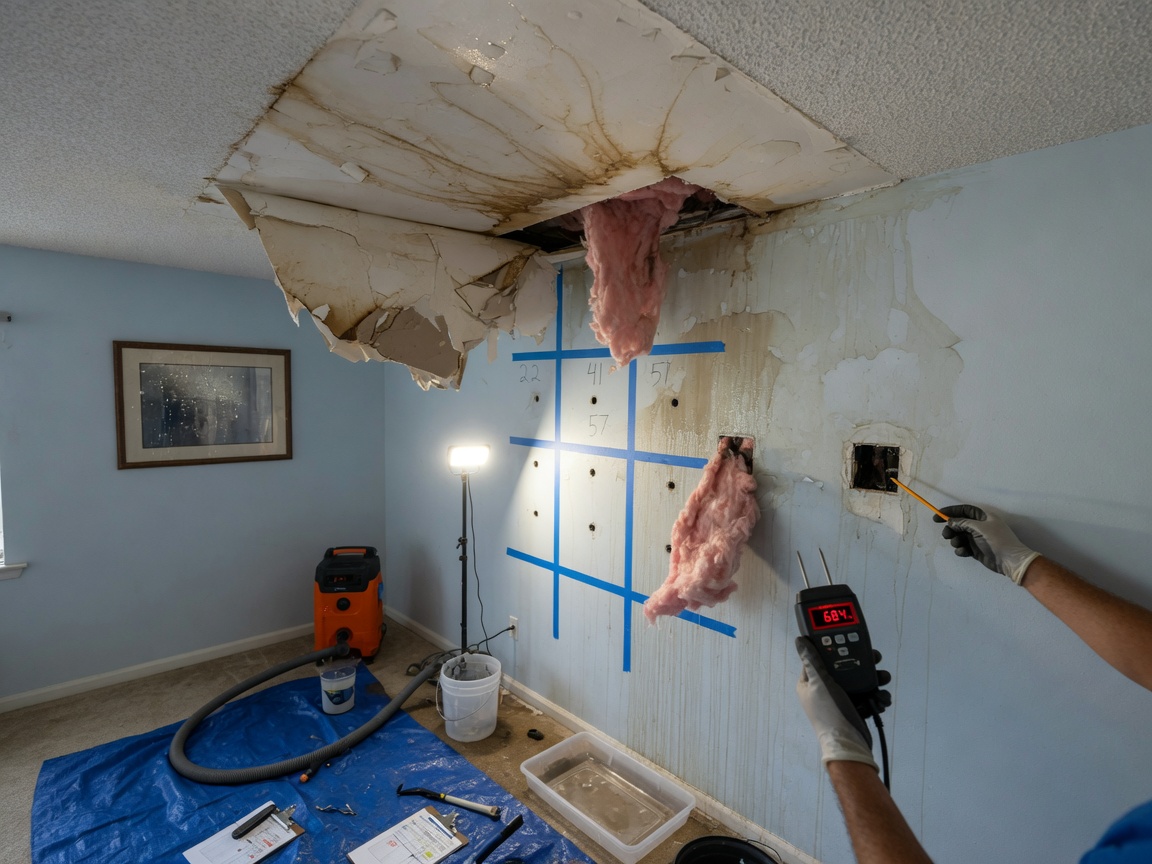
Storm damage water cleanup addresses water that enters homes and buildings during heavy rain events or tidal flooding common along the Annapolis waterfront and Eastport low-lying zones. Older structures often allow water through aging foundations, windows, or roofs during these events.
Typical sources include wind-driven rain through openings, overwhelmed gutters, and tidal surges that push water into basements and ground-level spaces. Signs appear as pooling near doors, damp walls after the storm passes, or sudden water rise in lower levels during high tide combined with rain.
Property owners should avoid entering areas with standing water near electrical outlets and should document visible damage with photos before any cleanup begins. Immediate steps focus on stopping additional water entry where safe and moving valuables out of affected zones.
Assessment uses moisture meters to locate hidden water in walls and floors. Extraction removes bulk water, followed by targeted drying that accounts for humidity levels typical after coastal storms. Materials like hardwood floors and plaster in historic Annapolis homes often require slower drying rates than modern drywall.
When another specialist may be needed
If storm water has compromised load-bearing elements or entered electrical systems, an appropriately qualified contractor should evaluate those conditions separately from the water removal work.
Sewage Backup Cleanup Services We Offer
✓Tidal Flooding Water Extraction
Removes water pushed inland by tidal surges, which often carries higher sediment loads than rain alone and requires different containment methods in Eastport and City Dock properties.
✓Wind-Driven Rain Intrusion Cleanup
Targets water that enters through roof edges, window seals, and siding during high-wind storms, focusing on upper-level moisture that later migrates downward.
Sewage Backup Cleanup Cost in Annapolis, MD
| Service | Typical Range | What Affects It |
|---|---|---|
| Volume of water | Increases extraction time and number of pumps required | Storm surges often produce larger volumes than interior leaks |
| Affected square footage | Expands drying equipment needs and monitoring duration | Multi-story water migration common after wind-driven rain |
| Water source contamination | Requires additional containment steps for sediment-laden tid | Changes disposal and cleaning protocols |
| Materials affected | Historic plaster and hardwood need slower drying to avoid cr | Modern materials may allow faster turnaround |
| Access difficulty | Tight crawl spaces or multi-unit buildings extend project ti | Common in older downtown Annapolis structures |
Ranges are typical for Annapolis, MD and confirmed with an exact written quote before any work starts.
How it works
- 1
Storm Impact Assessment
Technicians inspect for both visible flooding and hidden moisture using meters suited to older Annapolis construction.
- 2
Bulk Water Removal
Pumps and extractors clear standing water while containing sediment typical of tidal events.
- 3
Drying and Monitoring
Air movers and dehumidifiers run until moisture readings return to normal levels, with daily checks for humidity spikes after coastal storms.
Pricing
Final scope depends on actual conditions observed on site.