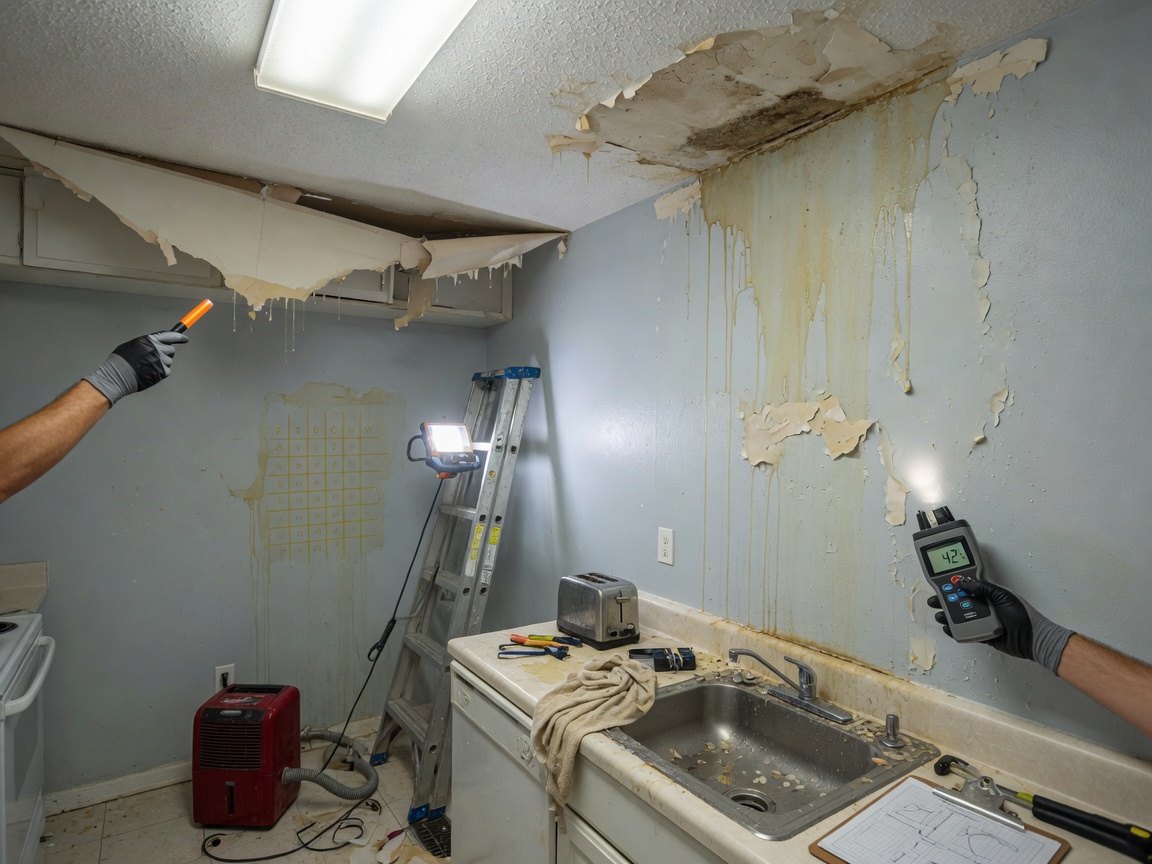
A burst pipe often sends water under pressure into cavities, ceilings, and multiple levels at once. Property owners notice sudden ceiling stains, baseboard discoloration, or water appearing far from the leak source.
When This Service Is Needed
Burst pipe cleanup becomes necessary after a supply line ruptures, a fitting fails, or freezing temperatures split older pipes common in Annapolis homes built before 1970. The service addresses both the visible water and the moisture trapped behind finished surfaces.
What Property Owners Should Avoid
Do not attempt to shut off water if you are unsure of the main valve location. Avoid using household fans on saturated drywall or carpet, as this can spread moisture into unaffected rooms and increase overall drying time.
Materials That Require Different Treatment
Plaster and lath walls absorb and hold water differently than modern drywall. Hardwood floors cup or delaminate when water sits underneath, while vinyl and laminate often trap moisture against the subfloor and require removal for proper drying.
Scope and Duration Factors
The amount of water released, square footage affected, and how quickly the leak was discovered all change the project. Water that reaches multiple stories or travels into insulation behind exterior walls extends both extraction and drying phases. Access difficulty in finished basements or tight crawl spaces also lengthens the timeline.
When insulation, electrical wiring, or HVAC ducts are saturated, an appropriately qualified specialist may need to be involved before drying can be completed.
Storm Damage Water Cleanup Services We Offer
✓Ceiling and Wall Water Damage Restoration
Removes saturated drywall or plaster and restores surfaces after the pipe is repaired and the structure is dry.
✓Structural Drying and Dehumidification
Uses industrial air movers and dehumidifiers to pull remaining moisture from cavities after visible water is extracted.
Storm Damage Water Cleanup Cost in Annapolis, MD
| Service | Typical Range | What Affects It |
|---|---|---|
| Amount of water released | Increases extraction time and equipment needs | Larger volumes require more pumps and longer drying cycles |
| Affected square footage | Determines number of drying zones | Multi-story or multi-room spread raises labor and equipment costs |
| Water source contamination | May require additional cleaning steps | Category 1 water can become contaminated once it contacts building materials |
| Duration before discovery | Extends drying and demolition scope | Longer exposure increases saturation of insulation and subfloors |
| Materials affected | Changes removal and drying methods | Hardwood, plaster, and insulation each require specific protocols |
| Access difficulty | Adds time for equipment placement | Finished basements or historic trim increase labor |
Ranges are typical for Annapolis, MD and confirmed with an exact written quote before any work starts.
How it works
- 1
Locate and Stop the Source
Technicians find the burst section, shut off the water supply, and document the pipe location for the plumber.
- 2
Extract Standing Water
Submersible pumps and wand extractors remove pooled water from floors and cavities to prevent further migration.
- 3
Moisture Mapping and Containment
Infrared cameras and moisture meters identify hidden wet areas; containment barriers limit cross-contamination to dry rooms.
- 4
Targeted Drying
Directed airflow and dehumidification focus on wall cavities and subfloors until readings return to normal levels.
Pricing
Final project scope depends on actual conditions observed on site.