Storm damage water cleanup in Annapolis focuses on water that arrives with heavy rain or tidal events rather than appliance or pipe failures. Property owners in Eastport and near City Dock often see water push through bulkheads, windows, or low foundation walls during nor'easters.
Typical sources include wind-driven rain through older roof flashings, overwhelmed storm drains backing up into basements, and saltwater overtopping in low-lying coastal blocks. Signs appear as damp carpets, water stains on lower drywall, or standing water hours after the rain stops.
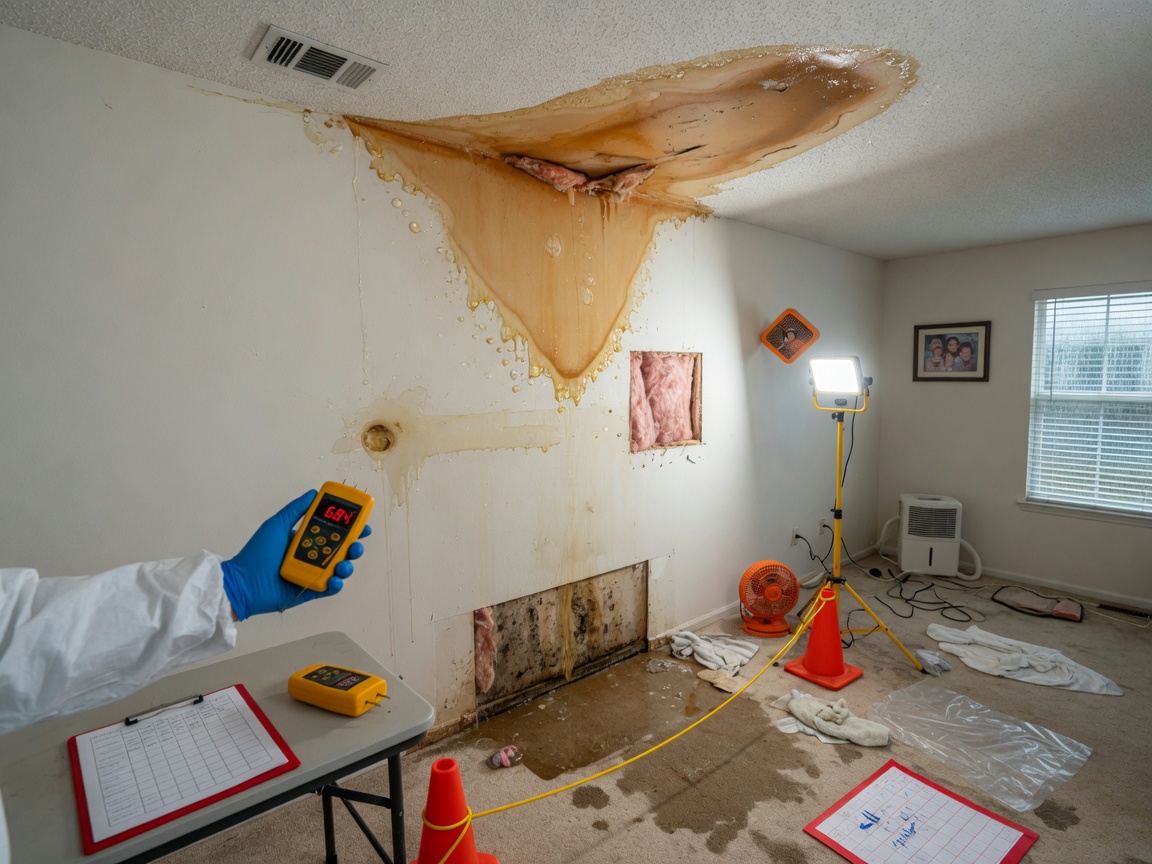
Immediate owner considerations include shutting off electricity to affected rooms and avoiding entry if water depth or electrical risk is unknown. Professional assessment uses moisture meters to locate water that has wicked into subfloors or wall cavities common in historic Annapolis construction.
Extraction removes bulk water first, followed by targeted drying because storm water often carries sediment and contaminants that affect how quickly materials can be salvaged. When water reaches insulation or hardwood, removal or specialized drying equipment is usually required.
Project scope changes with the volume of water that entered, the square footage affected, how long the water sat before discovery, and whether the source was fresh rain or tidal floodwater. Older plaster walls and timber framing in historic homes absorb and release moisture differently than modern drywall.
Another trade may be needed if storm impact also damaged roofing or exterior siding; in those cases the restoration company coordinates with qualified roof or siding specialists rather than performing that work itself.
Structural Drying and Dehumidification Services We Offer
✓Storm Water Extraction
Removes standing water left by rain or tidal surge before structural drying begins.
✓Post-Storm Moisture Mapping
Uses meters to locate hidden moisture in walls and floors that storm water often reaches in older Annapolis buildings.
Structural Drying and Dehumidification Cost in Annapolis, MD
| Service | Typical Range | What Affects It |
|---|---|---|
| Water volume | Larger storm surges increase pump time and equipment needs. | |
| Square footage affected | Wider spread from tidal flooding extends drying duration. | |
| Water source contamination | Tidal or sediment-laden water requires more cleaning steps. | |
| Duration before discovery | Longer saturation raises risk of material replacement. | |
| Materials affected | Historic plaster and hardwood often need specialized drying or removal. | |
| Access difficulty | Tight crawl spaces or multi-level historic homes slow equipment placement. |
Ranges are typical for Annapolis, MD and confirmed with an exact written quote before any work starts.
How it works
- 1
Storm Impact Assessment
Technicians inspect for tidal or rain entry points, test electrical safety, and document affected materials.
- 2
Bulk Water Removal
Pumps and extractors clear standing water while containing sediment typical of storm events.
- 3
Targeted Drying
Air movers and dehumidifiers address moisture in historic plaster, hardwood, and insulation.
- 4
Final Moisture Verification
Readings confirm materials have returned to acceptable dryness levels before any repairs.
Pricing
Final scope depends on water volume, contamination level, square footage, and materials affected.