
2026-08-10 · Bob Harlan
Water Damage in Annapolis Historic and Waterfront Homes: What Property Owners Should Know
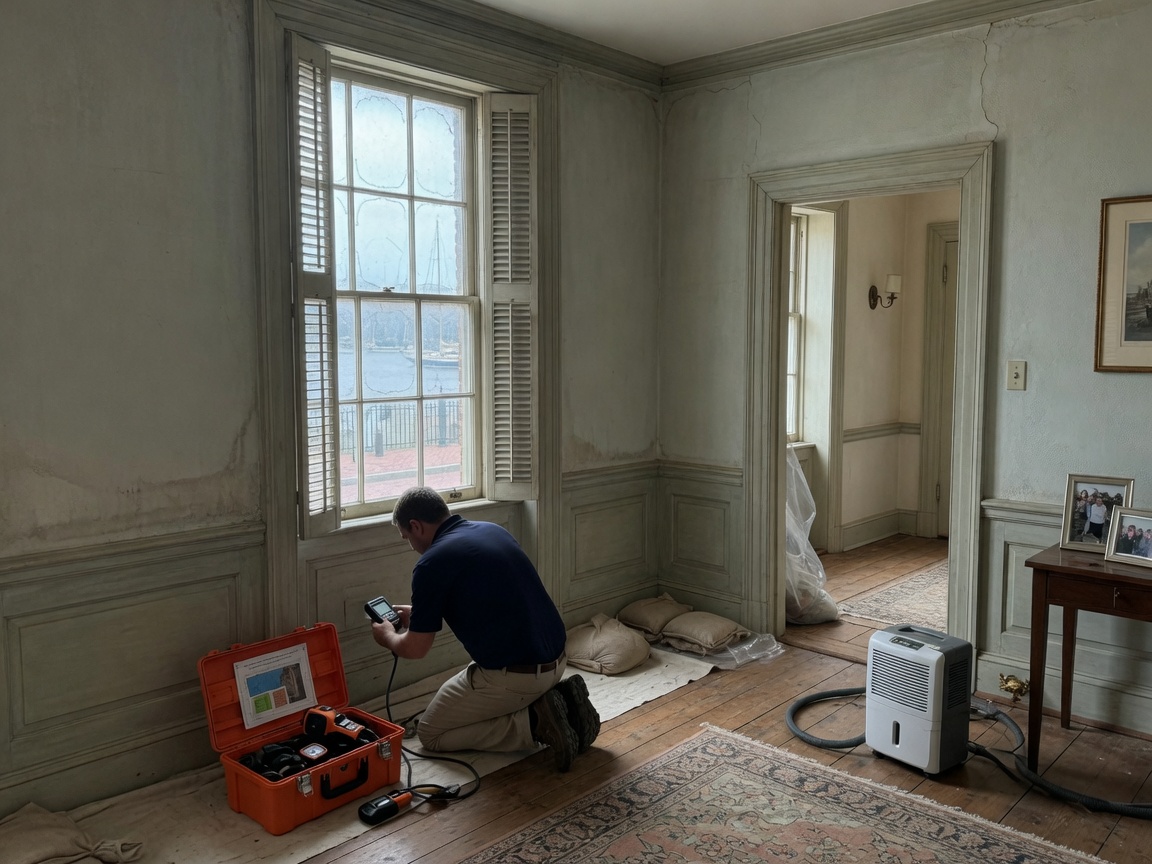
Annapolis historic and waterfront homes encounter water damage primarily through tidal flooding along the City Dock and Eastport shorelines, combined with aging plumbing and original materials that retain moisture differently than modern builds.
Identifying Unique Vulnerabilities in Older Structures
Original plaster, timber framing, and brick foundations in pre-1950 Annapolis homes absorb and hold water longer than drywall or concrete, creating hidden pockets that promote mold growth weeks after an event. Waterfront locations add repeated exposure to salt-laden moisture that accelerates corrosion of metal fasteners and wiring. Property owners should map known low-lying areas around their lot before any storm season, noting how elevation changes affect runoff from adjacent streets. Documenting existing cracks or settling in foundations provides a baseline for later comparison after any water contact.
Differentiating Coastal, Storm, and Indoor Water Sources
Tidal flooding in downtown Annapolis rises gradually with lunar cycles and can affect crawl spaces without visible surface pooling, while flash flooding from heavy rain arrives quickly and carries debris. Plumbing leaks inside kitchens or bathrooms remain localized and often involve clean water initially, whereas sewage backups introduce contaminants that demand immediate evacuation of affected rooms. Appliance failures, such as washing machine hoses, produce sudden volumes that spread across finished floors but rarely reach structural members unless undetected for hours. Distinguishing these sources guides whether simple extraction suffices or full material removal becomes necessary.
Safety Priorities Before Any Assessment
Turn off electricity at the main panel when standing water reaches outlets or switches, and avoid entering rooms where structural sagging appears in ceilings. Never attempt to pump out active tidal water yourself, as rising levels can trap individuals inside lower levels. If sewage is present or the odor of fuel or chemicals is detected, exit the property and contact emergency services rather than beginning cleanup. These steps protect occupants first while preserving evidence for insurance documentation.
After confirming the space is safe, reference the practical timeline in What to Do After Water Damage in Your Annapolis Home: First 24 Hours to organize photos and initial containment without spreading moisture further.
When Professional Equipment and Expertise Become Essential
Homes with historic woodwork or waterfront basements typically require industrial drying and dehumidification systems to reach moisture readings below 12 percent in embedded timbers, a threshold standard household fans cannot achieve. Structural drying and dehumidification teams use moisture meters calibrated for dense materials common in Annapolis architecture. When tidal or storm water has entered finished spaces, flood damage cleanup specialists remove saturated insulation and subflooring that would otherwise remain hidden behind baseboards. Delaying this step often leads to irreversible warping of original flooring.
Owners in Historic Downtown Annapolis should also verify that any restoration plan complies with local historic district guidelines before walls are opened, preventing later permit issues during repairs.